Worksheet Preview
Alphabet Worksheet
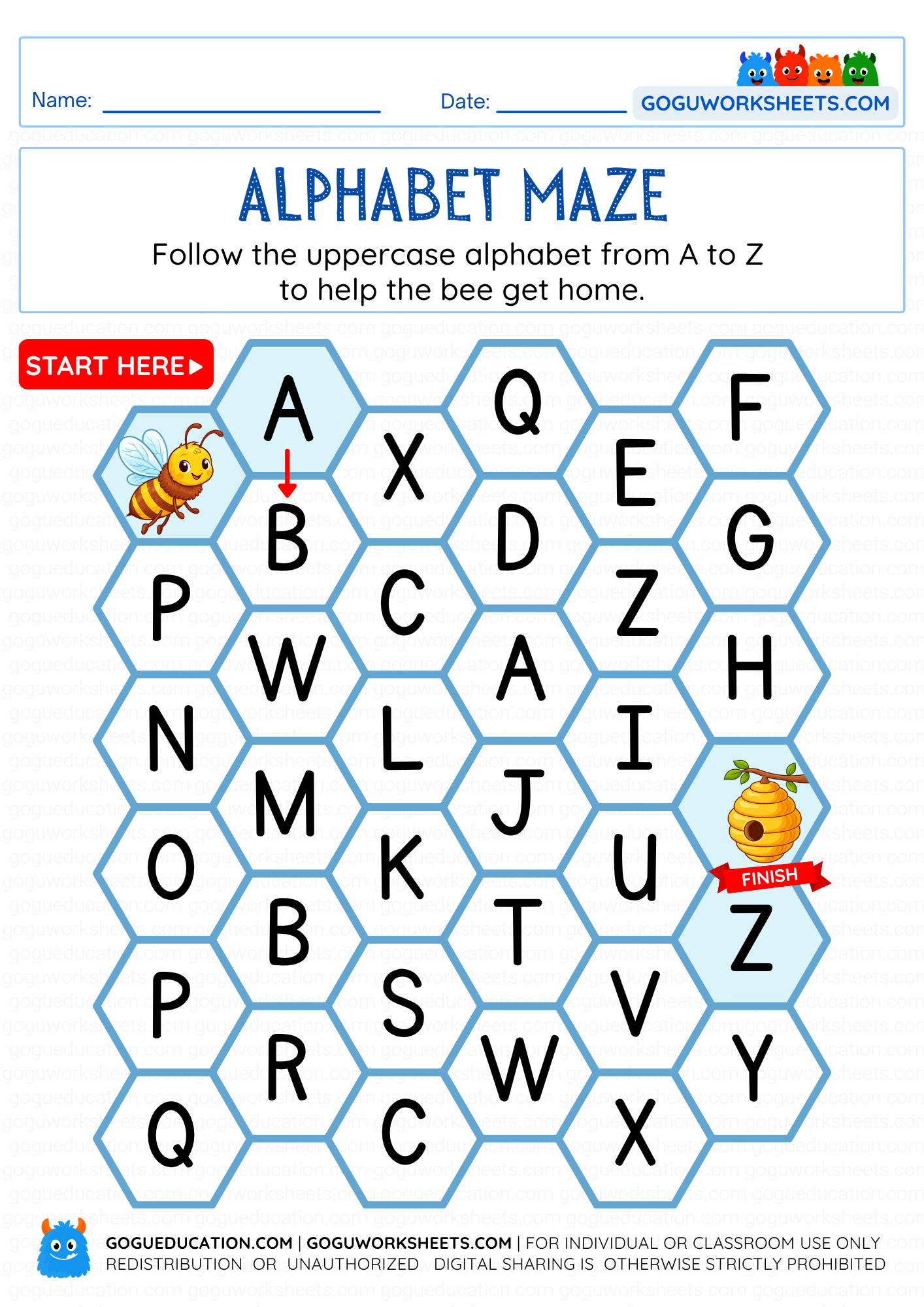
Alphabet Maze – A to Z Bee Worksheet
A bee-themed alphabet maze worksheet where children follow uppercase letters from A to Z through a honeycomb path. Great for practicing alphabet order, letter recognition, visual tracking, and early problem-solving.
Teacher Quick Info
Instant download · A4 printable · No registration required
What Is This Alphabet Maze Worksheet?
This uppercase A to Z bee worksheet helps children practice alphabet sequencing by following the correct letter path through a honeycomb maze.
Students begin at A and move through the maze in alphabet order until they reach Z and help the bee find the hive. It is useful for PreK, Kindergarten, 1st Grade, ESL lessons, homeschool literacy practice, and quiet classroom centers.
Learning Benefits
Children practice moving from A to Z in the correct uppercase letter sequence.
Students identify uppercase letters while searching for the next step in the maze.
The honeycomb path supports scanning, attention to detail, and eye movement control.
The maze format turns alphabet practice into a small literacy puzzle.
How to Use This Printable
- Print the worksheet on A4 paper.
- Review the uppercase alphabet from A to Z.
- Ask children to find the letter A in the honeycomb maze.
- Follow the alphabet path in order: A, B, C, D, and so on.
- Trace or color the path until the bee reaches the hive.
- Read the alphabet together after completing the maze.
Teacher Tip
For beginners, say each letter aloud before moving to the next honeycomb. The worksheet becomes a tiny buzzing alphabet adventure.
Frequently Asked Questions
What does this alphabet maze teach?
It teaches uppercase letter recognition, A to Z alphabet order, visual tracking, attention to detail, and early problem-solving.
Is this worksheet uppercase or lowercase?
This worksheet focuses on uppercase letters from A to Z.
Is this worksheet free to print?
Yes. The PDF is free for personal, classroom, and homeschool use.
What age is this worksheet best for?
It is best for children ages 4 to 7, including PreK, Kindergarten, and 1st Grade learners.
Can this be used for ESL lessons?
Yes. It works well for ESL learners who are practicing English uppercase letter order and alphabet recognition.