Worksheet Preview
Science Worksheet
Tomato Plant Life Cycle Worksheet
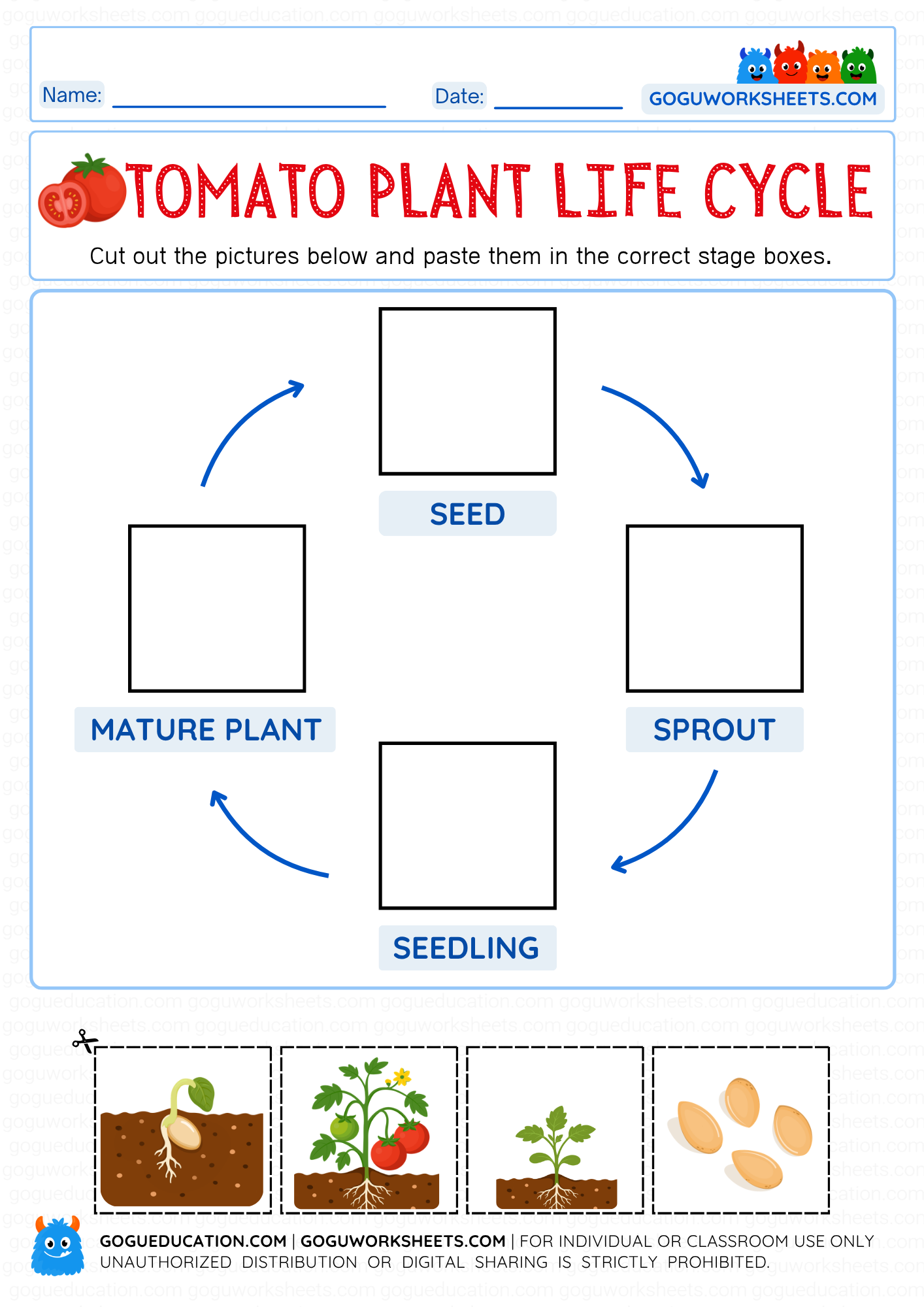
A hands-on plant life cycle worksheet where children cut and paste pictures into the correct order: seed, sprout, seedling, and mature tomato plant.
Teacher Quick Info
Instant download · A4 printable · No registration required
What Is This Tomato Plant Life Cycle Worksheet?
This printable science worksheet helps children learn how a tomato plant grows from a seed into a mature plant.
Students cut out the pictures and paste them into the correct stage boxes to complete the life cycle sequence. It is ideal for plant science, gardening units, spring lessons, homeschool science, and early STEM centers.
Learning Benefits
Children learn the stages of tomato plant growth: seed, sprout, seedling, and mature plant.
Students place the stages in the correct order to show how plants grow over time.
Learners compare pictures and notice differences between each stage of growth.
The activity supports fine motor skills while reinforcing science vocabulary.
How to Use This Printable
- Print the worksheet on A4 paper.
- Review the plant life cycle words: seed, sprout, seedling, and mature plant.
- Ask children to cut out the pictures at the bottom of the page.
- Look at the life cycle arrows and stage labels.
- Paste each picture into the correct box.
- Read the completed life cycle together.
Teacher Tip
Show real tomato seeds or a plant photo before starting. The worksheet becomes a tiny garden lab on paper.
Frequently Asked Questions
What plant stages are included?
The worksheet includes seed, sprout, seedling, and mature tomato plant.
What does this worksheet teach?
It teaches plant life cycles, sequencing, observation, cutting and pasting, scientific thinking, and early STEM vocabulary.
Is this worksheet free to print?
Yes. The PDF is free for personal, classroom, and homeschool use.
What age is this worksheet best for?
It is best for children ages 4 to 8, including PreK, Kindergarten, 1st Grade, and 2nd Grade learners.
Can this be used in gardening lessons?
Yes. It works well for plant science, gardening units, food plant lessons, and spring classroom activities.